
A tripod and star tracker are a strong starting point for astrophotography, but they cannot keep every exposure sharp. Wind can disturb the support beneath the camera while the shutter is open. Two photographs from my September 4, 2026 session show how much the result can change in just 11 seconds.
Photos and field experience by Michael Olson, AllModernTech.
Two exposures, identical camera settings
I used a Nikon D850 with a 120–300mm f/2.8 lens set to 170mm, mounted on a Radian Telescopes carbon-fiber tripod with a Sky-Watcher Star Adventurer 2i tracker. Both images were recorded at 10 seconds, f/5, and ISO 5000.
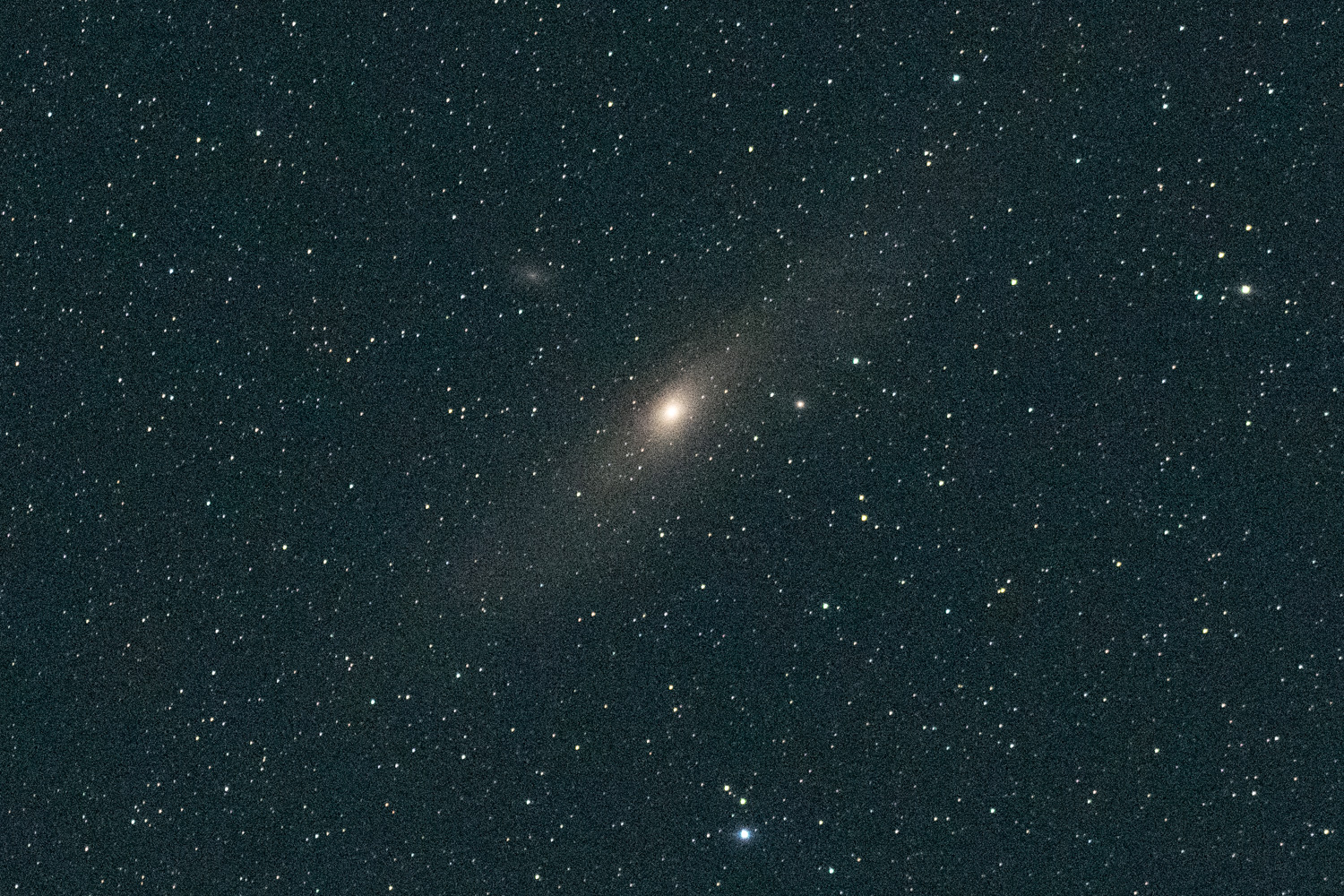
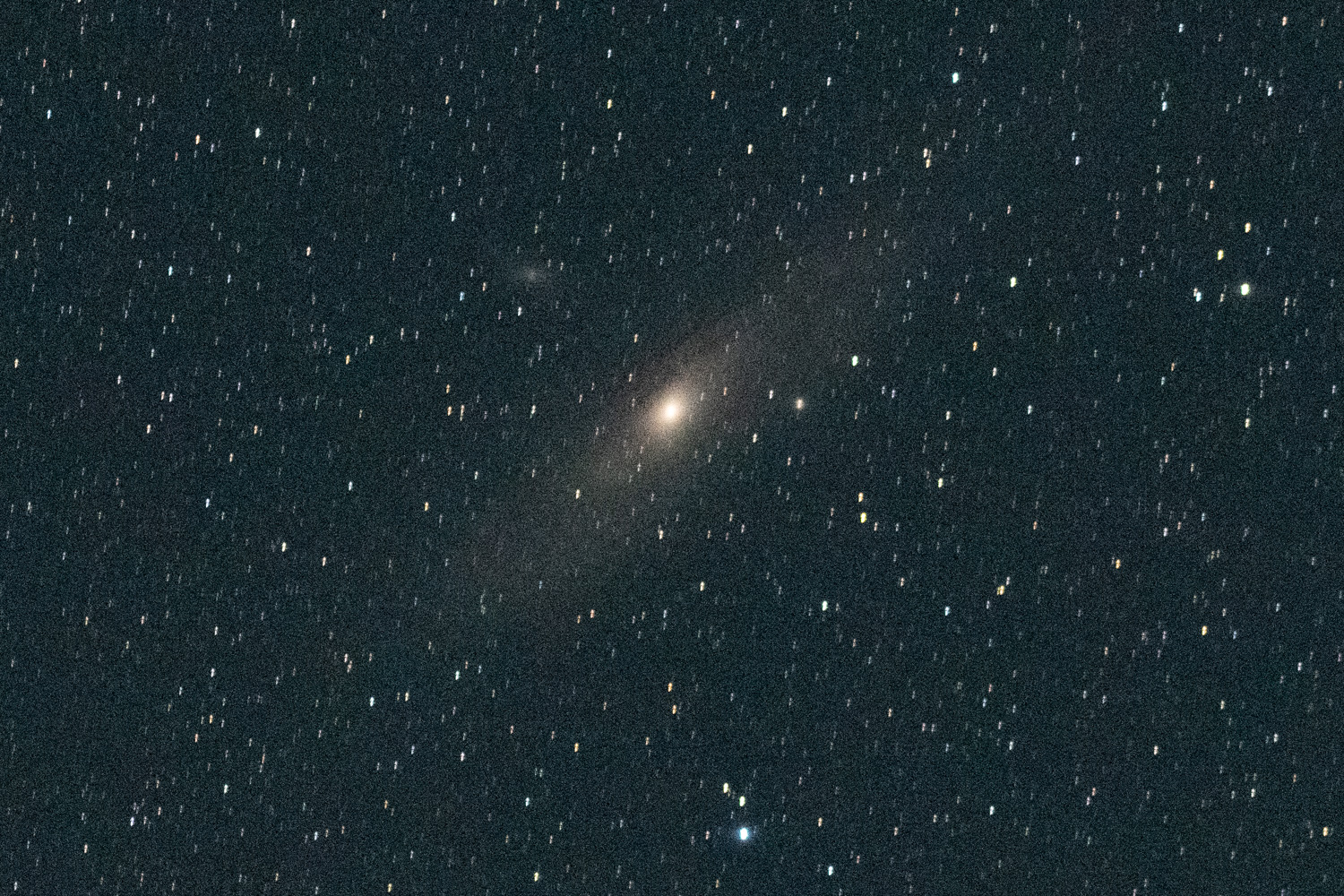
These JPEGs were exported with exposure adjustments and without additional denoising or sharpening. The visible noise is useful context: noise and motion blur are different problems. Look at the shape of the stars to compare the two exposures.
What happened during the second shot?
I did not observe wind disturbing the tripod and camera while taking these shots. I noticed the motion afterward, while checking the images for sharpness, and attributed it to wind. The second frame shows elongated stars across the image, consistent with movement during the exposure. This is better described as motion blur than as the camera suddenly losing focus. The photos alone cannot prove the precise source of every movement.
A star tracker compensates for the apparent movement of the sky as Earth rotates. It does not cancel wind moving the tripod, loose connections, or vibration elsewhere in the setup. Tracking and stable support solve different parts of the problem.
Prepare for the wind before a long sequence
A night can start perfectly calm and change while you are taking a long sequence. When shooting hundreds of frames—sometimes around 700—I prefer to prepare the tripod for possible gusts from the beginning instead of waiting until I notice blurred shots.
My Radian tripod has a hook beneath the mounting platform. I use that hook to add weight and find that it helps considerably in windy conditions. It is a useful part of my setup, rather than a guarantee that every exposure will be sharp.
An inexpensive ballast method I have used
One method that has worked for me is putting a gallon of water in a plastic bag and hanging it from the hook using the bag handles. If a bottle of water is not available, a large rock or several good-sized rocks can also provide ballast. Make sure the bag and its handles can safely support the weight of the rocks, and avoid sharp edges that could tear the bag. That is an example from my own experience, not a requirement to use water or a particular bag.
Other securely attached ballast may suit your tripod. Check the manufacturer’s instructions and the hook’s load limit, as well as the strength of the container and attachment. Position the weight so it cannot swing, hit the legs, pull on cables, or interfere with the tracker. A freely swinging weight can introduce movement of its own.
What to look for in a tripod and tracker
For the tripod: consider the complete camera, lens, tracker, and mounting hardware—not just the camera body. Look for firm leg locks, stable connections, and a manufacturer-approved way to add ballast. A carbon-fiber construction alone does not tell you how the assembled setup will perform in wind.
For the tracker: check its payload guidance, compatibility with your equipment, and setup instructions. The Star Adventurer 2i is the tracker I used for these images. It still needs a stable base and careful setup; this pair of photographs is not a comparison test of different trackers or tripods.
You can read the manufacturer’s Star Adventurer 2i product information and find its instructions in Sky-Watcher’s tracking-mount manual library. These are reference links, not affiliate links. For more equipment context, visit our Gear page.
The lesson from these two frames
A tracker can keep up with the sky while the support beneath it still moves. My practical takeaway is to prepare for changing conditions, secure appropriate ballast, and inspect individual frames during the session. If star shapes deteriorate, pause and check the whole setup before collecting hundreds more exposures.
Further reading
Nikon: deep-space astrophotography and wind-resistant tripod support. The equipment in that article differs from mine, but the need for stable support applies to this discussion.
Have a question about this example? Contact AllModernTech.
Comments
2 responses to “Why Your Stars Can Blur Even With a Tripod And Star Tracker”
[…] Related guide: Why Your Stars Can Blur Even With a Tripod And Star Tracker. […]
[…] Milky Way gear and Photoshop edit for a real example of a single-frame night photograph, or read Why Your Stars Can Blur Even With a Tripod And Star Tracker for a closer look at sharpness […]